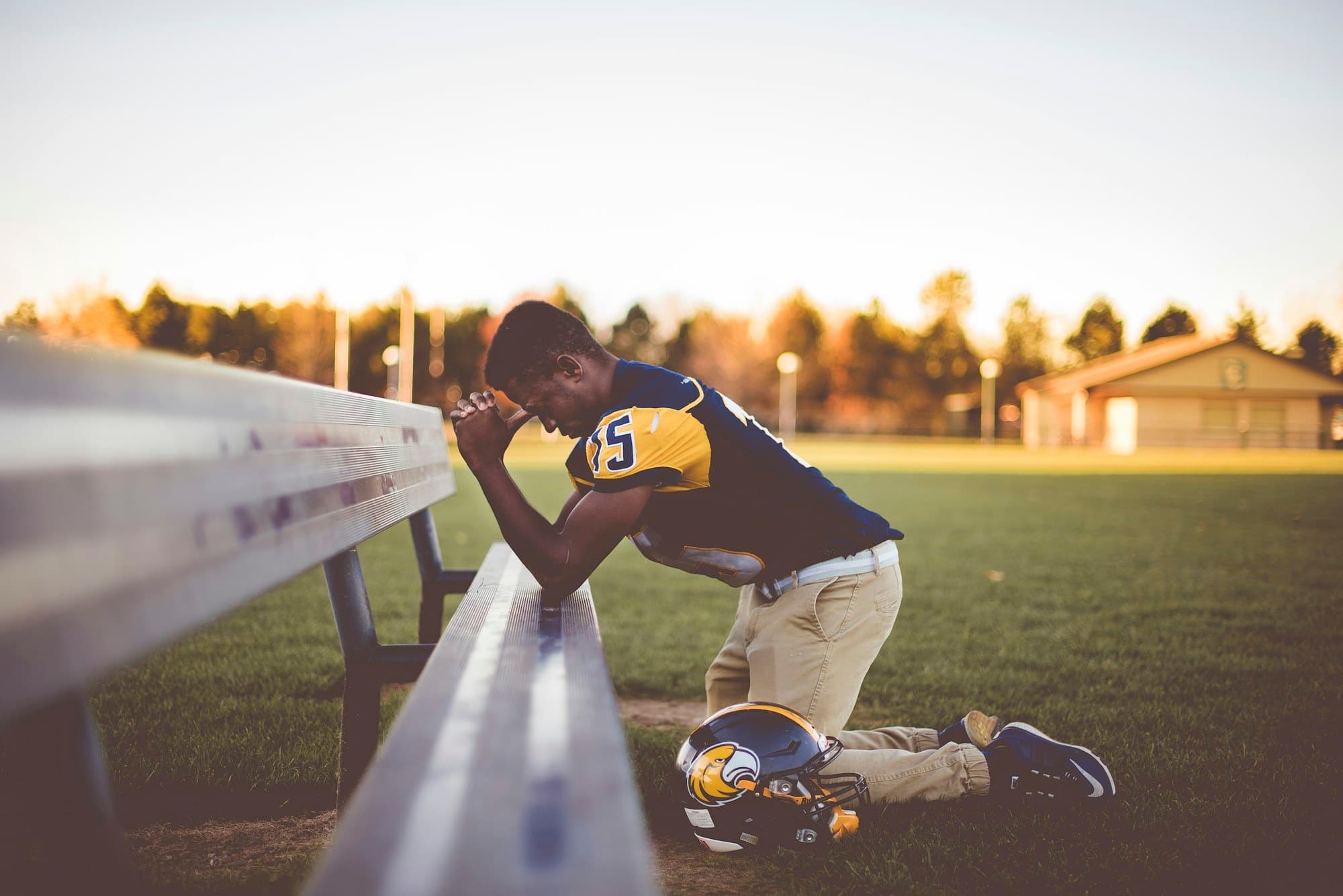
The knee is the easy part. Somebody reads a scan, names the thing, and hands you a timeline.
What nobody hands you is a plan for standing on the sideline in street clothes while your spot gets filled. There is no protocol for that, and it is the part that takes most athletes down.
When You Are Still In The First Week
"He heals the brokenhearted and binds up their wounds."
Brokenhearted comes first in that sentence and the wounds come second. Whoever wrote it understood that the damage is not only physical and that the two do not heal on the same schedule.
The first week is mostly grief. Calling it anything gentler makes it harder to deal with.
When You Feel Useless
"But he said to me, My grace is sufficient for you, for my power is made perfect in weakness."
2 Corinthians 12:9
Athletes build an identity out of what their body can do. An injury takes that away and leaves you holding a question you never had to answer, which is who you are when you cannot play.
The verse does not tell you to feel strong. It says the weakness is not the end of your usefulness. Most guys hear that as a consolation prize the first time, and it is usually the first honest thing anyone says to them after getting hurt.
When Rehab Gets Boring
"But they who wait for the Lord shall renew their strength."
Isaiah 40:31
Rehab is not dramatic. It is four exercises in a training room while everybody else is at practice, and it keeps going long after people stop asking how you are doing. The waiting is the work here.
Your athletic trainer is the one who actually knows where you are in the process. The National Athletic Trainers' Association has written a lot about return-to-play protocols, and the timeline exists for a reason.
When You Want To Come Back Early
"For everything there is a season, and a time for every matter under heaven."
Ecclesiastes 3:1
Every injured athlete runs the same math eventually. How much does it actually hurt, and could I play on it.
Do not. OrthoInfo, published by the American Academy of Orthopaedic Surgeons, is worth reading on what happens when you go back before the tissue has healed. Reinjury rates are not a scare tactic and the second one is usually worse.
Trusting a season you did not choose is harder than playing hurt.
When You Are Scared It Will Happen Again
"For God gave us a spirit not of fear but of power and love and self-control."
2 Timothy 1:7
Plenty of athletes get medically cleared and still never play the same, because the body is ready and the head is not. They plant on that leg and something flinches.
That fear is normal and it is worth saying out loud to a coach or a trainer. The STOP Sports Injuries campaign covers the psychological side of coming back, not just the physical side. Praying about it does not replace telling a person.
When You Do Not Know Who You Are Without It
"Therefore we do not lose heart. Though our outer self is wasting away, our inner self is being renewed day by day."
2 Corinthians 4:16
Read that as an athlete and it hits differently. Your outer self is wasting away and you can see the atrophy in the mirror every morning. The verse does not pretend otherwise. It says something else is growing on a schedule you cannot see.
What Actually Helps
Pick one verse, not eight. Put it where you will see it during rehab, because the training room at 6am is where this gets decided.
Three things that make the months easier:
- Show up to practice even when you cannot practice
- Tell your trainer when the fear shows up, not just the pain
- Find one thing you can still get better at this season
Sitting in the dugout in street clothes is miserable, and it keeps you a teammate instead of a former player. Guys who disappear during an injury often never fully come back, and the knee has nothing to do with it.
Fellowship of Christian Athletes huddles run in most high schools, and an injury is a reason to walk into one.
Play With Faith gives you a verse a day broken down for your sport, which matters more when the sport is the thing you cannot do.