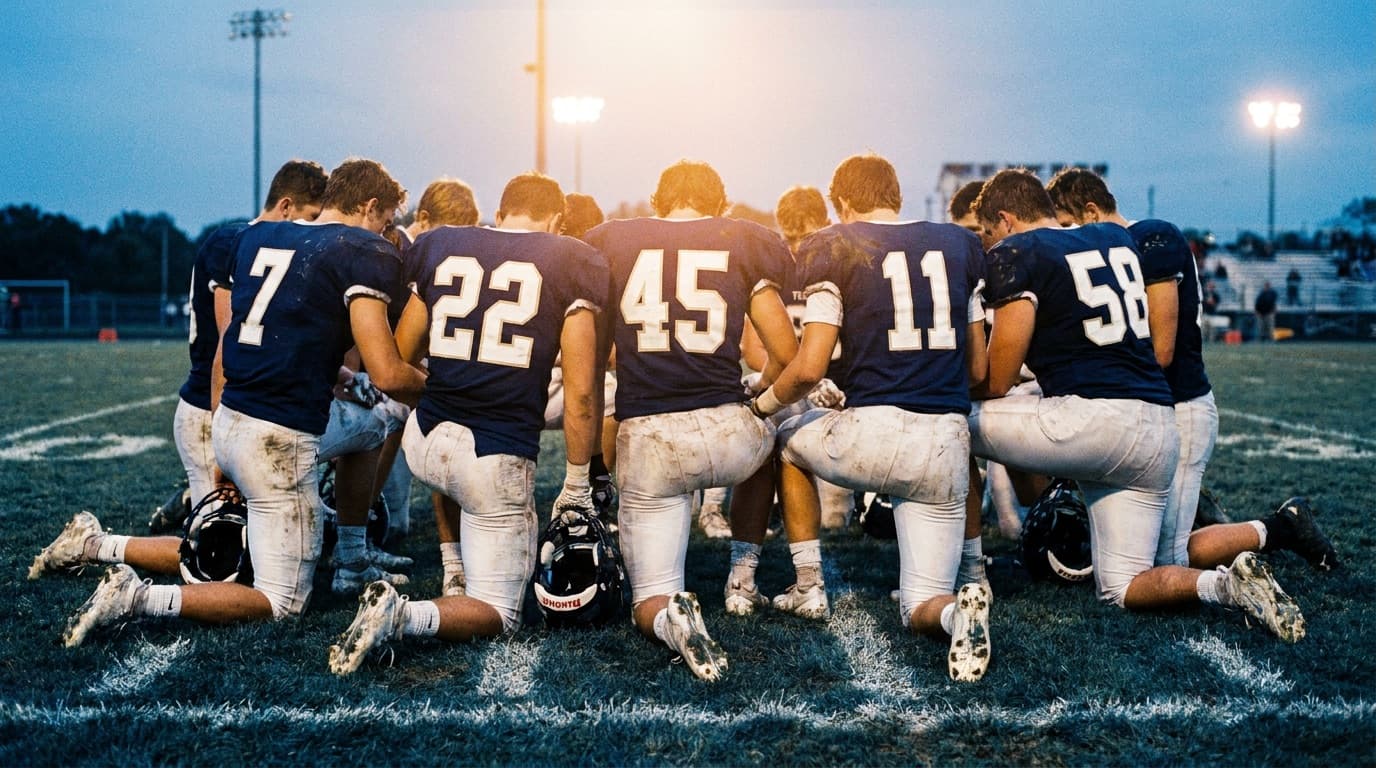
Most athletes pray some version of the same thing before a game. Let us win. Keep me from messing up. Help me play well. Then the whistle goes and the prayer is gone, because it was mostly nerves looking for somewhere to land.
Wanting to win is fine. The trouble with aiming a prayer at the scoreboard is that you have handed your peace to the one thing you do not control, which is what made you nervous in the first place.
Why Praying to Win Backfires
You are about to walk into something genuinely uncertain, and you have just told yourself the good version is the one where you win. Every bad bounce after that reads as the prayer failing.
The other team is praying too. People do not like thinking about that, and it is worth thinking about, because it shows what the prayer was really for.
Pray for the Part You Control
Here is what is actually yours on any given night:
- How hard you go
- Your attitude when it falls apart
- How you talk to a teammate who just cost you a possession
- What you do with a call that went the wrong way
None of it depends on the scoreboard.
"Whatever you do, work heartily, as for the Lord and not for men."
Play the game as an offering instead of an audition. That one move takes the referee and the coach and the scout in the bleachers out of a seat they were never supposed to have.
Four Prayers You Can Actually Use
Short enough to say in the tunnel. Pick one.
Nerves. God, my hands are shaking and I want this too much. Help me play free. Whatever happens tonight, I am still yours.
A game that matters. You gave me this body and these reps. Let me spend all of it tonight and leave nothing in the tank. Help me not to play scared.
Coming back from an injury. I am not who I was and I am afraid it stays that way. Give me patience with my own body and courage to go hard anyway.
A teammate you are struggling with. Help me play for him tonight even though I do not feel like it. Keep my mouth shut when it goes wrong.
What About After a Loss
"Trust in him at all times, O people; pour out your heart before him."
Pour out. If you are furious about how it ended, say that part out loud. The Psalms are full of people complaining directly to God and none of them got struck down for it. Faking a peace you do not have is just more performing, and you already do plenty of that on the field.
A prayer only does so much, though. If the losses sit on you for days, or you have stopped enjoying something you used to love, tell an adult. The National Federation of State High School Associations publishes material written for coaches on exactly this, and most athletic departments have somebody whose job includes it.
Make It a Habit, Not an Emergency Call
A prayer you only say when you are scared works like a fire alarm. It goes off, you get through the fire, and then you forget it is on the wall.
Praying the same way on an ordinary Tuesday is what makes it available to you in the fourth quarter. That is the difference between a routine and a reflex, and it takes a few weeks.
If you want other athletes around while you build it, Fellowship of Christian Athletes huddles run in most high schools and Athletes in Action works with college programs. Doing this alone is harder than it needs to be.
Pregame Mode in Play With Faith was built for this exact minute. One short verse, two sentences on what it means for your sport, and one line to take out of the tunnel.